What made this complicated
The Apple Pay launch depended on several downstream systems. I brought finance IT, fraud, compliance, fulfillment, returns, and customer support into planning and testing so we could validate transactions through authorization, order creation, refunds, and reconciliation.
Brands also moved through development, QA, and launch preparation on overlapping schedules. Priorities and budgets could change while the program was already underway.
What I owned
I owned payment roadmap sequencing, backlog refinement, sprint planning, and delivery for a 10-person core team. My partners included payments, fraud, finance and SAP, order management, fulfillment, customer service, brand teams, and external vendors.
Three decisions that kept the program moving
01
Map the transaction flow
Before testing began, I mapped the handoffs between checkout, payment processing, the order-management system, SAP, fulfillment, returns, and support. That surfaced missing partners and acceptance criteria early.
02
Pause work cleanly
When brand priorities changed, we finished work that was nearly complete and stopped newly started work before it created rework. Current roadmaps and documented dependencies made later restarts easier.
03
Launch with a monitoring plan
A performance concern surfaced before launch. After reviewing frequency, affected flows, and possible customer impact with engineering, we proceeded with alerts, real-time monitoring, and support coverage.
A fix we chose not to build
During the migration, we found a low-frequency PayPal self-service returns issue on the legacy platform. Support volume and brand exposure were limited, and the new order-management platform would resolve it. I recommended against a temporary patch, keeping engineering focused on the migration and avoiding duplicate work.
Results
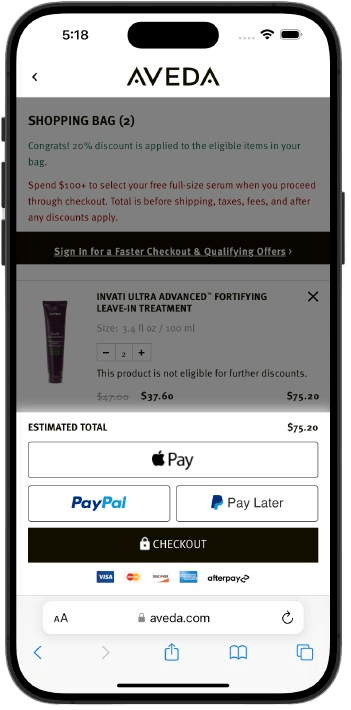
Apple Pay launched successfully and became one of Aveda’s most-used mobile payment methods. The broader modernization covered 19 global brands and supported $36M in annual revenue impact.
The planning and monitoring practices were reused as other brands moved through the program.