BeautyGPT / AI product discovery

From image recognition to explainable skincare guidance

I built BeautyGPT as part of an AI Product Management certification. When the initial image-classification approach proved unreliable, I changed the product direction and rebuilt the MVP around stated concerns, ingredient retrieval, and clearer guidance.

Role

Product Manager and builder

Stage

Working prototype

Deliverables

PRD, user flow, evaluation, and prototype

Product focus

Discovery, AI reliability, and changing direction

The customer problem

Skincare discovery can be difficult for people who do not know which ingredients, routines, or product types are relevant to their concerns. Product pages often assume a level of skincare knowledge that many customers do not have.

BeautyGPT was designed to make that starting point easier by helping a user describe a concern and understand which ingredients or product characteristics may be worth exploring.

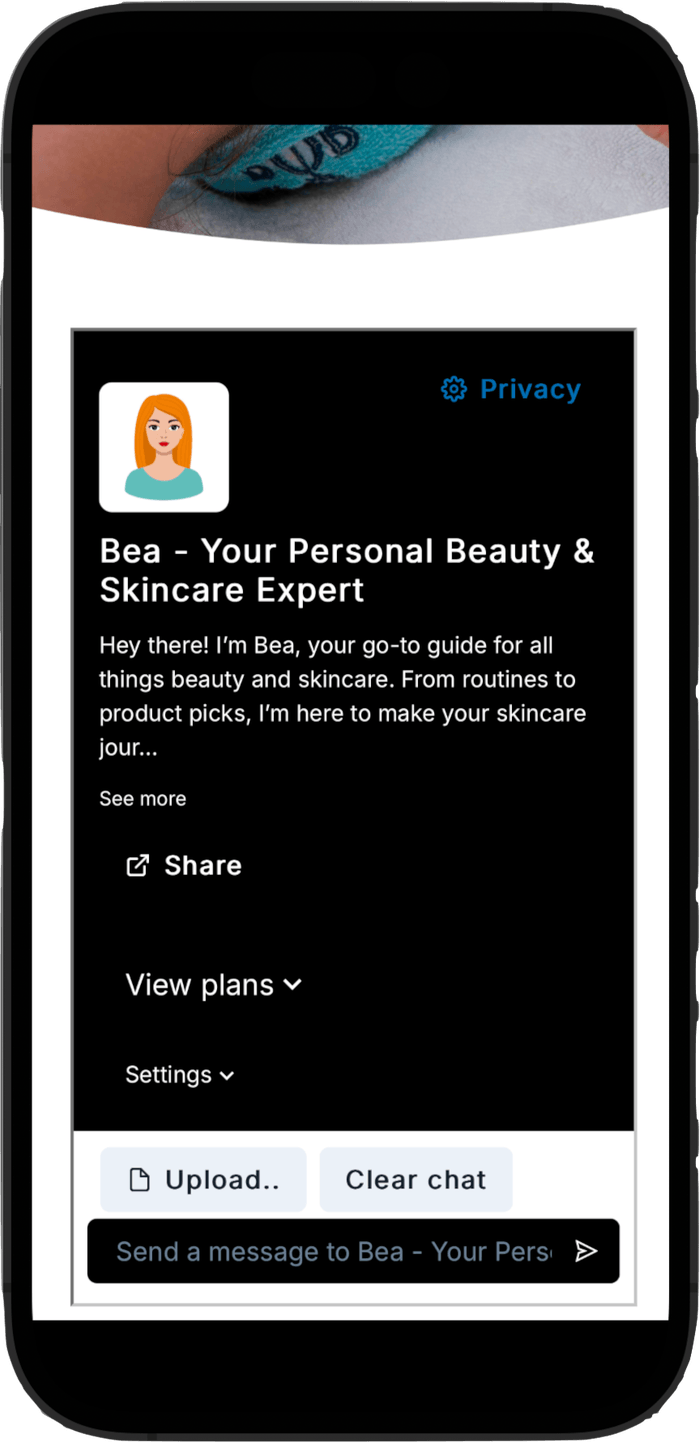
BeautyGPT mobile prototype welcome screen for Bea, a personal beauty and skincare assistant
Mobile view of the working BeautyGPT prototype.

The first approach

The original concept used image classification to identify skin characteristics and guide the experience. I assembled image datasets, trained and troubleshot models in TensorFlow and Keras, and tested whether the output was dependable enough to support the product.

The available data was too limited and inconsistent, and the model did not generalize well enough. The experience could appear convincing while producing guidance I could not confidently defend.

Changing the product direction

01

Reduce the vision dependency

I shifted the starting point from an uploaded image to information the user could state directly, including their concern, goals, and preferences.

02

Make the guidance explainable

The revised experience connects a concern with relevant ingredients and explains why they may be useful, giving the user something concrete to evaluate.

03

Build an MVP I could test

I explored embeddings and vector search, implemented ingredient retrieval, and tested the conversation and response structure in a working prototype.

AgentHost configuration screen for the BeautyGPT prototype and ingredient knowledge base
AgentHost configuration for the deployed prototype, including the ingredient knowledge base.

The revised MVP

The current prototype gives users a conversational way to explore skincare questions and product considerations. It uses the information they provide to surface relevant ingredient guidance while keeping the reasoning visible.

The working AgentHost prototype remains embedded below so the product can be experienced directly.

Outcome

BeautyGPT now has a live working prototype and a supporting PRD. Changing direction produced an experience that is easier to evaluate, explain, and improve.

The project also gave me hands-on experience with model limitations, retrieval, prompt testing, and the product decisions required when an AI capability is less reliable than expected.

What this work reinforced

AI product work depends on the quality of the data, the visibility of failure modes, and the level of trust the experience asks from the user. A technically ambitious idea still needs evidence that it can support the customer decision it is meant to improve.

Working prototype

Try BeautyGPT

Ask Bea a skincare question, explore the current conversational experience, or review the product thinking behind the MVP.

Try the working prototype


Ask Bea a skincare question below.